"If it's this good, how much better can it get?" Answer, "More than you can imagine!" This is becoming an old saw for me but when you hear something for the first time, and perhaps no one before you has heard what you are hearing, it is nevertheless instantly recognizable. Why, because a system that is firing on all cylinders is closer to life. It tells you more about what the composer, musicians and engineer intended, the actual events that unfolded and the space in which they occurred. Way more then we know is hidden in these grooves, and the adventure is a journey into, and closer to, the truth that was captured in session. One thing it does not appear to be is an asymptotic curve that gives less and less the further it goes: it appears the opposite. Or perhaps the changes get smaller and smaller as the system gains sensitivity with correspondingly larger and larger results? Whatever the case, here, with this system, we are in uncharted territory. Multiple transformational events have occurred in our reference system in rapid succession over the Christmas holiday. First we replaced a PranaWire Cosmos interconnect and and an Arhat interconnect pair with our new Sukhavati interconnects - a major sea change. This upgrade is like waking up in a wonderland: everywhere you look there is beauty. Here's another old saw: We could have stopped there and thought we were done. But we knew and know there are still areas where major improvements can be made. Hearing what we are hearing now and thinking about the remaining possibilities makes me kind of giddy. What can I say? You must hear this. Contact I have always felt that one of the greatest vulnerabilities in a system is the connectors. On a microscopic level, wherever metal meets metal, there is imperfect contact. There will be areas that touch and areas that don't, and even where they appear to be touching there are microscopic pits and scratches. In this circumstance micro-arcing, that draws noise into the system like an antenna, occurs. Also, the points of contact are especially vulnerable to all of the vibrations that are running throughout the room and the components. The internal connections, where wire joins the contacts, are susceptible to the same influences. Many super high-end cables, such as our PranaWire interconnects and power cables, are heavy and exert downward force on the connector, stressing the pins and the contact points and, in some instances, pulling the pins away from their female counterparts further compromising the connection. Thus exists a panoply of weaknesses that has never really been seriously addressed till now. Enter the Furutech NCF Booster, a device that supports the connector,surrounds it with noise absorbing materials and has the potential to damp vibrations that smear the signal. I had thought of a similar device. In fact, I have two such prototype devices in my system, but they lack the sophistication of the NCF Booster. Mine are simply shapes that surround a power plug. In their favor they contain materials that absorb noise and more importantly fo.Q material that absorbs vibrations. But they do not support the plug from beneath, which is very important. To give credit where it is due, the Furutech product sounds better than my prototype. Had they merely created a support system for cables, I would have praised them as an important and necessary adjunct to any system, but the added reduction in noise is an important benefit. However there is one area in which they fall short. But this minor shortcoming turns into an advantage when we add fo.Q SH21 or 22 material. The first booster that I put into the system went around the IEC power plug feeding the Airtight ATE-2005 phono stage. I did not hesitate to line both curved inner surfaces of the clamping device with fo.Q SH21e 2mm thick damping material prior to inserting it in the system. This just seemed to me to be the logical thing to do. The improvement was unmistakeable: improved focus and definition of primary and secondary information including attacks, sustains, decays and ambient cues. I was asked if I had listened both with and without the fo.Q material. I had not. So when I inserted the second unit on the IEC plug feeding the power supply to the Feastrex field coil drivers, I spent a fair amount of time going back and forth, listening with and without. I listened to two cuts. On the first I listened without, then with and then again without the fo.Q material. On the second, I listened with, without and finally with. This was rather a pain in the neck to accomplish as the component is sitting inside the cabinet between shelves. To affix the top clamp to the bottom clamp portion of the NCF Booster you have to reach behind the component and stretch an O-ring over the top of each of the vertical stiles and wrap it around the knurled knobs that hold the bottom clamp in place and then cross it and stretch it a second time doubling the pull of the O-ring - easier said than done when access is limited. Nevertheless, I persevered and was able to draw a firm conclusion. While the Boosters on their own reduce noise and improve the sound in general, the addition of the damping material gave a more solid, organic and transparent presentation allowing a much deeper view into the soundstage. Before adding the third Booster to the system I added an fo.Q AB-4045 platform under the Airtight ATC-2 preamplifier. I supported the platform with 4 Oyaide INS-BS insulators. I affixed circles of self-adhesive fo.Q TA-102 material to the tops and bottoms of these. The preamp was already resting on Audio Replas quartz footers, but the addition of the isolated platform was a significant step upward as was the added Booster. The fourth Booster was a special case. I had intended to use two boosters, one on each RCA connection to the preamp. In actual practice, though, there was only room to treat the input connectors, as the output connectors were too close to the IEC. To make this work I needed an additional damping support for the plugs. I joined together layers of fo.Q SH-21e using two-sided tape to form an "H" shape to cradle and keep each RCA plug vertically and horizontally aligned with the back of the preamp. (See illustration). This configuration provided the same level of improvement as the Boosters used on the IEC connectors. Note: I tried an analogous setup on the PranaWire Lalit phono cable where it exits the Durand Kairos tonearm. While there was an improvement in terms of solidity, the sound was overdamped with a loss of high end extension. The inclusion of two Sukhavati interconnects in the system is, without question, the single upgrade with the greatest impact to date. Adding the NCF boosters with fo.Q damping material and the fo.Q platform gave a further significant and important refinement to an already world-class system. Ignition "The more you polish a thing, the more it shines." Nikhil Banerjee, upon completing my lessons in raga Jaunpuri. I've previously written about the amazing improvement brought about by the inclusion of the Acoustic Revive RPC-1 power Line Conditioner. You plug it in anywhere and forget about it. It has no outlets so you cannot plug anything into it. The circuit was developed to remove noise from the original optical mouse, but this version is seriously beefed up for audio. An RPC-1 had long since taken up residence in the reference system and had proved its mettle within moments of first being installed. What would a second one bring? Again, within seconds, the result was clear: even greater clarity, transparency, enhanced three dimensionality, you-are-there-ness. Polished deeper and deeper, peering into space. Please Visit Our Store for the NCF Booster and fo.Q SH-22K Material Lift Off Lush, rich, deep velvet, utterly relaxed, unimpeded harmonics, the piano smooth beyond belief, outrageous! What did I do? After all of the above mentioned upgrades I unpacked and set up the Acoustic Revive RL-30 MK-III record demagnetizer and demagnetized Ray Brown's 'Soular Energy' and listened to both sides. The Rl-30 MKIII equaled the impact of the RPC-1 or a Booster, but seemed to be acting on a finer and more ultimately refined scale. The result was noticeable across all frequencies. And we are not done yet... In the next few months we will add another PranaWire Sukhavati interconnect and the Sukhavati speaker and power cables. If it's this good, how much better can it get? Stay tuned...
8 Comments
Now I know how it feels to give birth and immediately relinquish the child to the adoptive parents. I had but a few hours to install and audition my latest creation in the reference system before my customer would come to claim it. In any given series, the speaker cable usually presents a more powerful picture than the interconnect, but I also know that the interconnect performs the support function. The ballerina may soar, but she cannot get off the ground without her partner's lift. I had heard only one Sukhavati interconnect here on two separate occasions, and each time was a major revelation. Three ICs were delivered to the customer. Hearing three in his system was beyond breathtaking. Now I would listen to just the speaker cable before he came, have a short listen together and then pack them up and say goodbye, at least until we can build a set for here. He will now have the only existing three ICs and speaker cable all together. Having heard what three ICs can do, with the speaker cable added, I'm sure I will be on my knees thanking the heavens when I visit his place. Don't get me wrong, the reference system as it stands is spectacular. If you hadn't heard this you might think there is nowhere to go, but there is no forgetting or going back once you have been presented with the holy grail. With little time to spare I pulled out a few of reference LPs and embarked on a short marathon:
On 'They Say It's Wonderful', the sound stage receded just a touch, but also got considerably deeper and more spacious overall. The richness of Johnny Hartman's voice has always been breathtaking, but now, the finest edges of his voice are fully present. The last vestiges that you couldn't have known were there arrived like the sun from behind clouds - heaven. With the Arhat speaker cable Coltrane's sax was already full and rich, but here it was all splendor and depth, the sound clearly swelling through the interior shape of the horn. And the brushwork - ultimate delicacy. You want to hold your breath. How to describe what Jaco's bass sounds like in 'Boogie Man' in this setup? Thunderous, cataclysmic, but swift and agile like lightning, delicate as dew with really round really fat strings. On Dick Nash's trombone lead and solo on 'Chelsea Bridge'? Velvet, butta. Ted Nash's alto - so rich you could touch it. The notes from Larry Bunker's vibes hanging in space like fruit on a tree. And Ray Brown... Everyone says Brown's bass is over emphasized on this LP. Get over it! He's closely miked. He's the diva on this recording. But here's the thing, in this situation, it's the first time I've heard the bass absolutely connected through all the registers. Oh I thought I had heard that before too, but Oh man! Uh uh. I could live with that bass 24/7. Just absolutely right on. Don't turn your nose up. You got to have some electronica now and then to broaden your horizons. I hate vocoders, except when Daft Punk uses them. Everything is just right, rock solid here. Sheer joy. 'Constantinople' gets really relaxed without loosing a speck of energy. Drums up there in back trading riffs - delicacy personified. The raspy twangy timbre of the dumbek membrane, the metallic thwack of the Udu, both clear as a bell. Bowed bass on 'Fire and Rain?' Fugeddaboutit! The Sukhavati came and went. Who was that masked man, and when will he return to save our town? Yesterday I was able to visit my customer's installation and hear what three Sukhavati interconnect cables will do in a system. All previous discussion aimed at quantifying the improvement is out the window. Here's why: First, everything in the system matters, from the footers to the amps to the DAC and so on. We should not loose sight of that. Everything that went before laid the groundwork for the cables to do their magic. However, "magic" is too weak a term to apply to what I experienced. If we have to quantify this upgrade, I would have to say that it is the equal of the sum total of all the upgrades that preceded it. Is that fair? Is that accurate? I don't know and I don't care. What I heard still leaves me astonished, flummoxed, unseated and unhinged. I can and will go through a list of attributes to some extent, but that will not convey the impact of hearing this. What this is is obvious, but at the same time something that has never been heard before. Imagining this sound prior to its existence would be like imagining Pasteur in the age of the great plague. It is obvious, because it brings the listener home. It is not like being propelled into outer space, rather it is like, as my customer said, "Oh, I think he bought a new trumpet. That must be a new flute." Everything is so much itself. The complete envelope of the original sound is there with zero glaze, artifact or compression. Z-e-r-o.
The Papanno recording of the triumphal march from Aida is a challenge to any audio system. I would wager that many exalted high end systems may not be up to the task. In addition to capturing the overall three dimensionality of the stage and the location of all the performers thereon, this setup did something I don't think I have ever heard before from a recording as complex as this: Imagine, if you will, (thank you, Rod Serling), standing on a balcony above a cocktail party. Of course you will hear the aggregate of all the conversations as the sound rises from below. Imagine hearing that aggregate as a three dimensional cloud that hovers above the crowd, full of all the individual reverb elements crashing around in space. Now imagine as you are hearing that, being able to triangulate each voice and its reverberant content from mouth level up (and down) with pinpoint accuracy as it bounces off of its neighbors. That is a hint of the level of specificity this system is producing. The depth and growl of bass tones is uncanny. The slightest dynamic increment is noted. Tonality is like nothing that has gone before. Everything is simply itself without any artifice, etc. I could go on, but I'm not sure it will do any good. We have just delivered the second and third pairs of Sukhavati interconnects to our customer. He has already had one pair in his system for a couple of weeks. This morning he called me and said, " I don't know if I can believe you any more." And I said, Why's that?" He said, "Because you say there is always room for improvement, and right now I don't see how that is possible." I asked him if he could compare the improvement to other upgrades we have provided. He said that it was hard to quantify. "An early basic upgrade may have had an apparent higher percentage of improvement, but this is difficult to describe. It is about the emotional connection with the music. I now have a direct conduit to Ruth Ann Swenson's voice. It's more like hiking up a mountain: Even just before the top your view is limited, but when you finally crest the summit you can see everywhere."
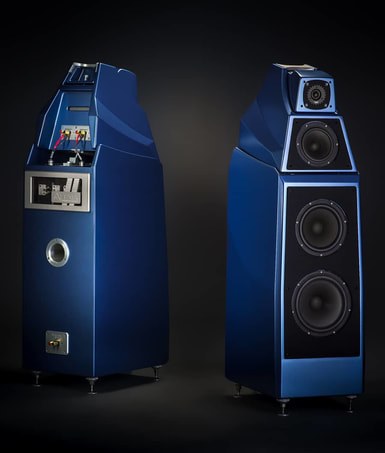
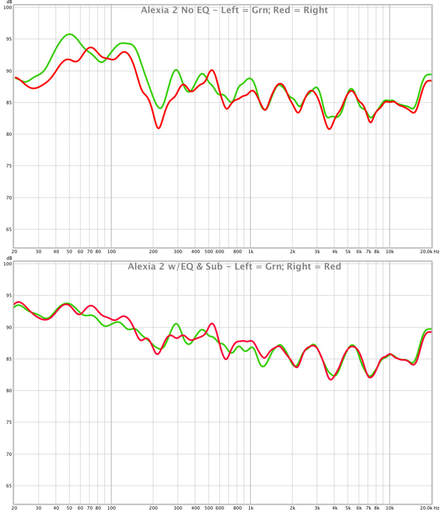
I haven't had the time to visit yet. I've only heard one Sukhavati IC in the system here and at the customer's house. In terms of absolute quality, even one in a system appears to remove the last vestiges of compression, but according to the customer not so. There was and is room for improvement: We have yet to deliver the speaker cable. Stay tuned. Our customer chose to upgrade to the Alexia II's without an audition. Quite a leap of faith, but it was certainly among the best decisions he has made. The II's are in a class of their own and a significant step upwards from the 1s. The tweeter is the best I have heard from Wilson, and, overall, the response is considerably more linear than its predecessor, requiring much less adjustment in the calibration. Virtually flat to 20 cycles (down 3db at 20) in his room, the sub was almost an afterthought. We were able to integrate it subtly. A minuscule shelving up of everything from 2k up added some needed bite without affecting the overall balance. Wilson is to be congratulated on producing such a fine speaker. The system is at a new pinnacle of performance. There is much more meat on the bones. Clarity, definition and separation are all improved. Can we extract more? Yes, the PranaWire Sukhavati interconnects and speaker cables are under construction. And beyond that? Watch this space. The upper chart shows the response of the Alexia in room (without sub) prior to our calibration. The lower chart shows the response after. The smooth gentle slope downward is nearly ideal. We are happy to announce that we are beginning production of a new speaker cable, The Sukhavati, or Realm of Bliss. For this cable we are pulling out all of the stops. It is a quadruple Ribbon Design with three of Pure Silver and one of pure copper (aggregate total = 2 gauge), a total of three shields for 21 element construction with specially treated internal layers, and pure silver connectors. I had not heard the RCP-1 myself until I took it to my customer's house in San Francisco a couple of weeks ago. (Please see my blog, "Rare Subtle Beauty", below which describes the evolution of this system in detail.) To put things in perspective, this is perhaps the most musical, most revealing system I have ever heard. It's ability to draw subtle distinctions and its command of micro-dynamics allows the listener to follow all of the performance's tiniest nuances. I thought we had already attained the apotheosis. I have no problem promoting anything from Acoustic Revive, even unheard, because my experiences with every one of Mr. Ken Ishiguro's creations have been extremely positive. Each one addresses a particular vulnerability in a hi fi system, and the more of them you add, the better the system performs You can easily find corroboration for that in many places on the web, but in particular if you follow Jeff Day's Acoustic Revive Chronicles in Positive-Feedback magazine. The linked article goes back to issue 39. There are many that follow over the years. The current issue is number 90! Still, I was only expecting a modest improvement by the insertion of the RCP-1. One, because the system was already at such a high level, it was hard to imagine what might be better, and, two, because every other plug-in-the-wall-and-forget-it device I had tried over the years never really added much, and in some cases, made things worse. My preconception could not have been more off the mark. One might rightly assume that since we were starting with a system that was already at an extraordinarily high level that the effect of the RCP-1 was magnified many times. Jeff Day's highly positive remarks on the RCP-1 are also based on listening to a very sophisticated and highly evolved system. Will the audiophile at the beginning of the curve derive as much benefit? I will have to wait to hear from more customers to know. I can say that in a system where we had gone to extraordinary lengths to enhance performance, to remove as much noise as possible, where we had heard clearly each individual improvement as we replaced this or that component or cable and where we heard the sum total of those improvements, we heard a leap as big as the insertion of the Arhat speaker cable or as big as the insertion of the upgraded power supply for the preamp. The certainty of the magnitude of this improvement was gained in the first few moments we listened. When you're in this kind of territory it's very hard to come up with the words to describe what you're hearing. Veils removed? Check. Greater inner detail revealed? Check. Improvement in micro-dynamics? Vast. But something else as well: The ability to follow contrapuntal movement within a symphony is vastly increased. Not only are micro-dynamics enhanced, they are now clearly in the service of the phrase. That is, now we can hear more clearly than ever the arc of the phrase, as well as all of the subtle fluctuations within it that give it its unique and individual character. Then we are more easily able to follow the sum total of phrases that are flowing simultaneously, both as an aggregate and as individual phrases with all of the subtle inner fluctuations readily apparent. Truly an astonishing upgrade! We spent nearly two and a half years upgrading a customer’s system with all PranaWire cabling, Linebacker In-line Passive Power filters and other improvements including multiple sets of fo.Q HEM-25 footers, Oyaide in wall wiring, Acrolink Mexcel digital and clock cables, SMc Audio electronics and proper calibration of the speakers and sub. This was an extraordinary opportunity to reach for the stars. The result is a system that brings us face to face with ineffable beauty and grace.
415-897-8884 • [email protected] Summary of ImprovementsUpgrades Provided by The Lotus Group:
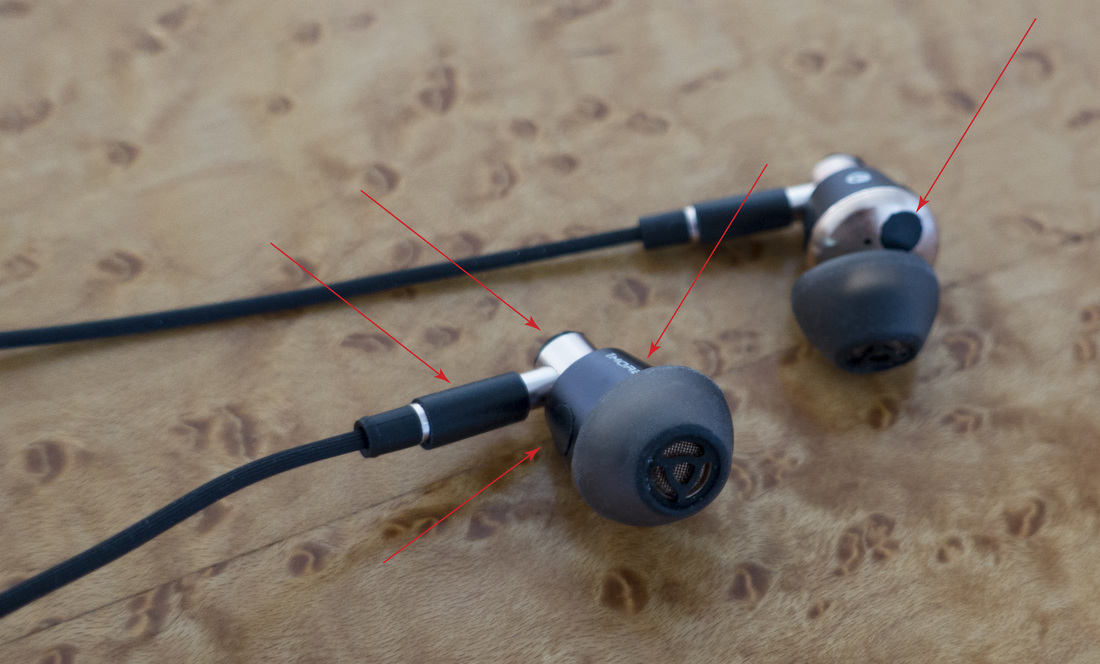
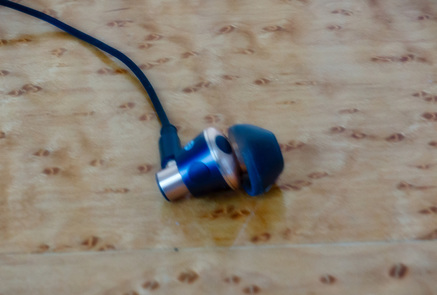
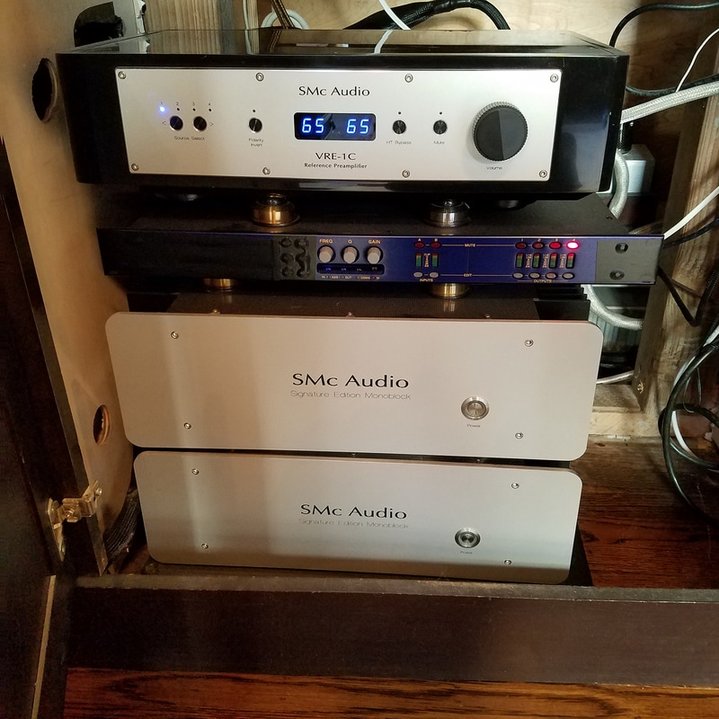
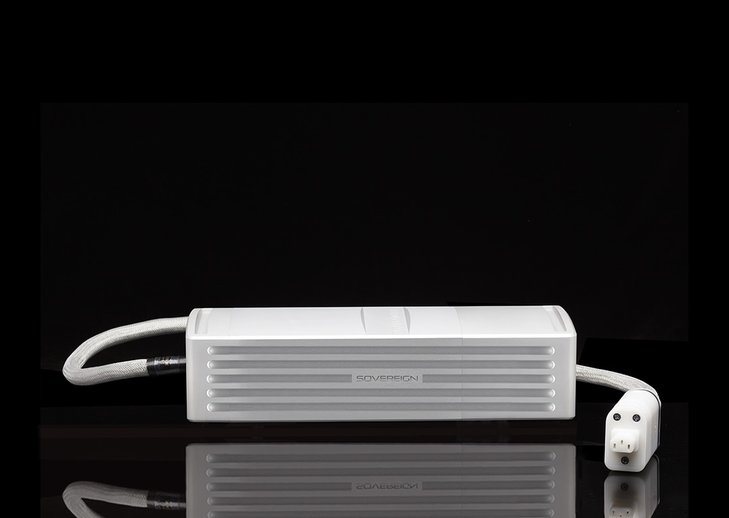
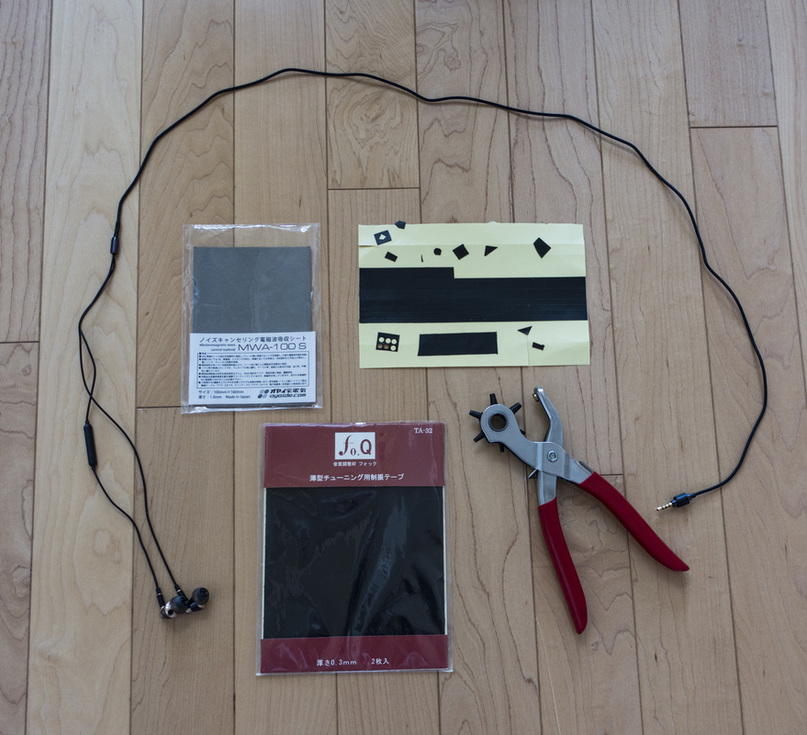
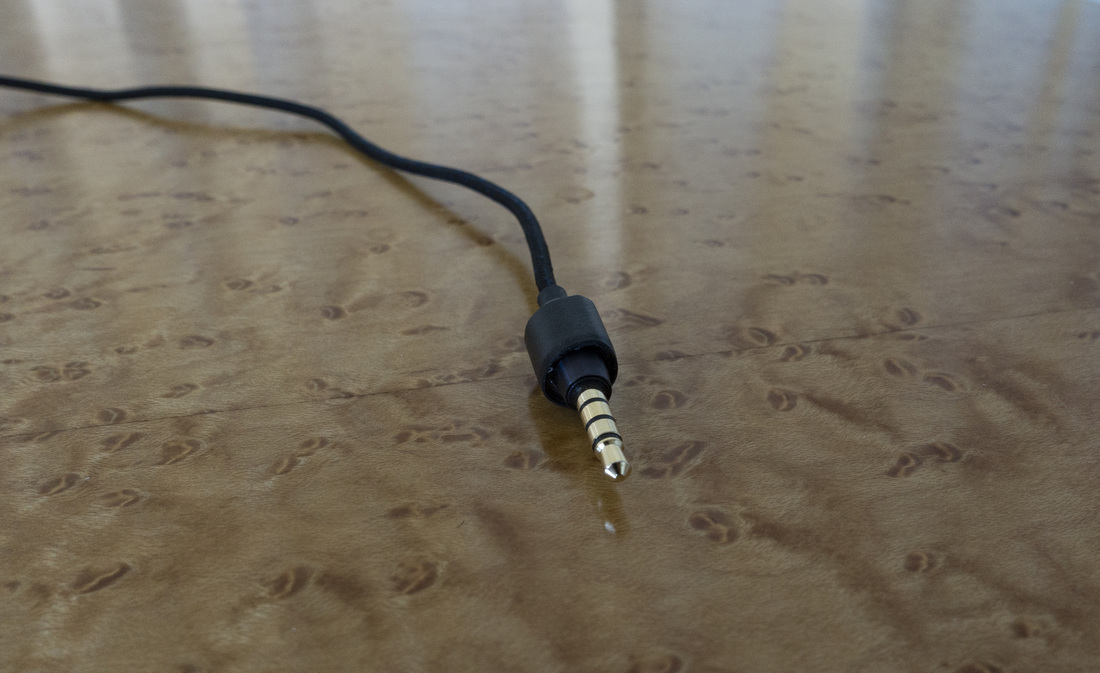
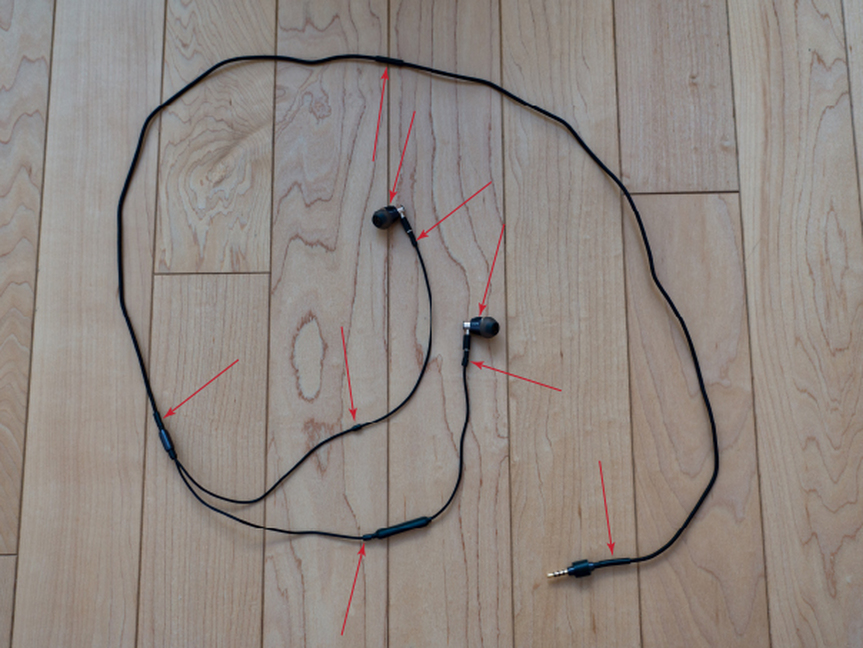
Electronics: Preamplifier SMc VRE-1C Preamplifier with Premium Power Supply Amplifiers: SMc Custom 400 Watt Mono Bloc Amplifiers PranaWire: Speaker cable: Sukhavati – Wilson Alexia II Speakers Avatar – Wilson Subwoofer Interconnects: Sukhavati - DAC to preamp Sukhavati - Preamp to Crossover Sukhavati - Crossover to Main Power Amps Cosmos - Crossover to Subwoofer Amp Power Cables: Sukhavati 3 Arhat 1 Digital Cables: Avatar Photon USB Power Conditioning: Linebacker SE 1 (Subwoofer Amplifier) Linebacker Sovereign 3 (1 feeding distributor feeding DCS digital stack, 1 feeding each power amp) Cables Other: Acrolink Mexcel 7N-DA6300 Digital Cable Acrolink Mexcel 7N-DA6100 BNC Clocking Cables (3) Power Conditioning Other: Acoustic Revive RTP-4absolute, RTP-6absolute Digital Processor: XTA DP424 Isolation fo.Q HEM25 footers - 9 sets fo.Q AB4045 Platforms - 2 fo.Q IP-22 Platform fo.Q SH-22K and TA-102 Damping Materials Furutech NCF Boosters - 8 Professional Calibration by Manny LaCarrubba Upgrades not provided by The Lotus Group: Aurender upgrade W10 to W20 Upgrade Wilson Sophia IIs to Wilson Alexia to Wilson Alexia II Add DCS master clock Firmware upgrade to DCS upsampler, converts all output to 2X DSD The Triple Driver in-ear phones from 1More have made something of a splash among audiophiles. Attendees at T.H.E. Show Newport were treated to an audition of fully broken in buds, and reports are that it was well worth it. Being stuck in my room for most of the show, I missed a lot, including the headphone space, but on my return, I heard about these marvels and decided to check them out for myself. At $99.99, the upside, especially based on what folks were telling me, seemed worth the risk. The packaging did not disappoint, and the inclusion of a magnetically closing faux leather box added to the feel of quality. The sound, however, was a different matter: Right out of the gate, though the bass was large and the potential for real transparency was present, there was a palpable whitish glare with bright crashy, splatty and thin sounding transients which meant that, for the time being, to me at least, they could not be not be regarded as "listenable". I decided to put as many hours on them as possible. I've been playing pink and white noise, sweep patterns and music though them. As of this writing there are at about 40 hours. My guess is that they won't come fully into their own until at least after 100 hours, maybe longer. Yesterday, being my usual impatient self, I decided to see what I could extract in the here and now. I dug into my tweak-o-holic's kit bag and came up with fo.Q TA-32, self-adhering 21st century damping material and Oyaide MWA-100S, electromagnetic wave control material. My first move was to apply a circle of TA-32 to the flat round back end of the ear buds. This added a significant level of clarity and weight to the presentation, though it was still far from musical and still had that hard to live with high-endy quality. The next move was to wrap the brass down tube with TA-32. Again another uptick. The next move was done in stages: I punched six dots using the largest punch on the leather punch tool shown above and applied them in one location at a time: 1st the bottom of the black portion of the body, then the top and finally on the brass face of the body just behind the ear cup. Each of these produced a profound improvement, with the one on the brass face being the most powerful. We were beginning to approach musical. The final two moves were to wrap TA-32 on the cable just below the "Y" and to wrap the 3.5mm stereo plug with first a layer of Oyaide MWA-100S electromagnetic wave control material and then a layer of TA-32. The outer layer of TA-32 was necessary because the MWA-100 S is very thick and would quickly come undone on its own. In fact, I put a little extra effort into bending it around the plug and holding it in place to insure that it would not unravel before applying the TA-32, and, of course, the TA-32 could not hurt. At this stage in the listening the buds are on the edge of being truly musical. I will continue the burn in process and report back in a future blog. For $100 I don't expect them to equal my Audeze LCD-3s, but they are easily now the most open sounding earbuds i own. (Disclaimer: I don't own any expensive earbuds, and I'm sure that the high priced spread is well beyond these, but for their price, and with a little tweaking, I think they are definitely worth the cash.) Let me know your thoughts and experiences. Thanks, Joe Update July 2, 2016I was about ready to pack these up and return them (they were stuck for several days at the edge where they still had a fatiguing upper midrange to treble glare), but something interesting happened between the last time I listened (yesterday) and today. Are they fully out of the woods? No, but the harshness and greater bulk of the fatiguing quality seems to have disappeared, leaving behind a mostly musical and fairly transparent signal. It still needs further break in, but it is getting interesting. Update July 8, 2016We have passed another milestone. There was a slight hiccup when it appeared that the bass in one ear was louder than the other. I'm now convinced that this was due to the sensitivity of the 3.5mm stereo plug, which must be seated perfectly. These buds have grown addictive with their transparency and openness being something of a marvel. Treble is still not world class with a slight tinge of tizziness, but now now subtle enough to be a non-issue. I decided to see if I could extract more performance with TA-32. In the photo below you can see where I have added more to the cords. I also added another dot to the buds themselves. The dot on the brass face of each bud came loose on their own, probably by constant rubbing against my ear. There are now three dots on the black band, which I think are quite secure. With these additions the 1More buds have become addictive. I have a new and heightened awareness of both music and background sounds on soundtracks and find myself grooving to deep synthesized bass - things I usually don't pay much too attention to. The magnification of ambient cues and the overall sense of transparency is immense. Further Additions

|
AuthorJoe Cohen Archives
July 2025
Categories |


RSS Feed